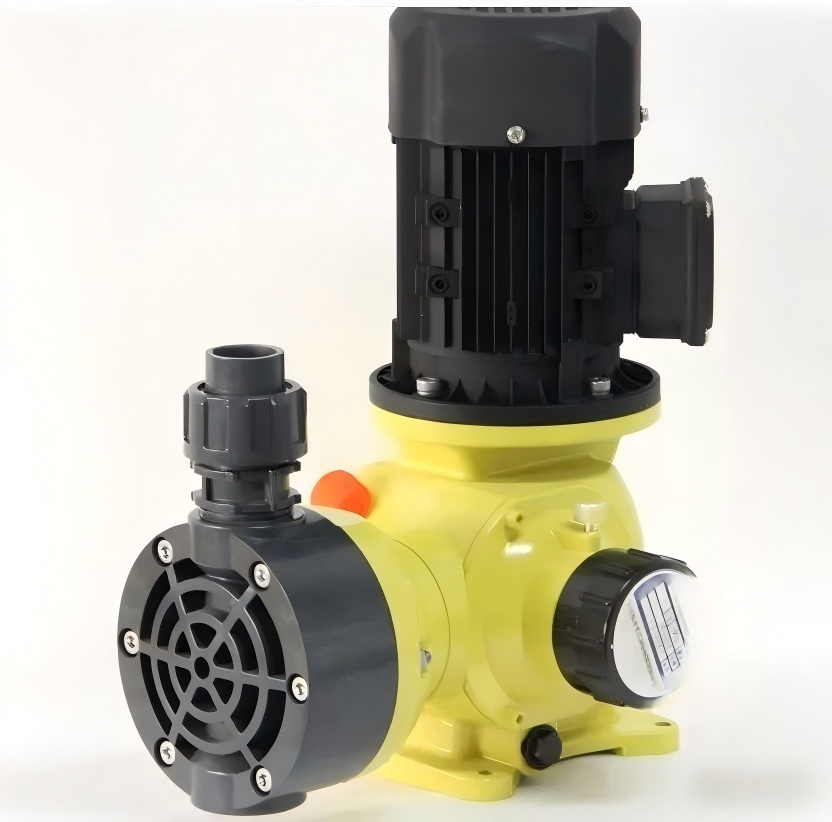
During daily use, dosing pump may malfunction due to drug impurities, wear, or improper operation. Below are 8 common faults with concise descriptions and targeted solutions for quick troubleshooting and maintenance.

1. Blockage of Filter and Drug Inlet Pipe
[Fault Cause]: Blockage from impurities, precipitates, or residual drug accumulation on filter screen/pipeline wall. High-concentration drugs or suspended particles increase blockage risk.
[Fault Phenomenon]: Significantly reduced/no drug flow; negative pressure at inlet or increased equipment load.
[Solution]: Stop equipment, close inlet valve. Disassemble and clean filter screen and pipeline of the dosing pump with water. Reassemble in order, check seals, and test run to confirm fault elimination.
2. Ball Valve at Drug Inlet and Outlet Blocked by Foreign Objects
[Fault Cause]: Foreign objects (impurities, crystals) get stuck between the ball valve core and seat, blocking drug flow.
[Fault Phenomenon]: No or fluctuating drug flow; stuck ball valve during manual adjustment.
[Solution]: Stop the equipment, close the inlet/outlet valves. Disassemble the ball valve, clean the core and seat. Check for wear, replace if necessary. Reassemble, tighten, and test run.
3. Poor Sealing and Air Leakage of Ball Valve at Drug Inlet and Outlet
[Fault Cause]: Wear on the valve core-seat sealing surface, loose installation, or impurity adhesion affects sealing.
[Fault Phenomenon]: Air leakage at interfaces, unstable outlet pressure, or potential drug back-suction.
[Solution]: Stop the equipment, clean the valve interface. Tighten the ball valve clockwise. Apply sealant if needed. Test run; replace the valve if leakage persists.
4. Loosening or Falling Off of Sealing Rings at Drug Inlet and Outlet
[Fault Cause]: Equipment vibration, incomplete installation, or aging causes seal ring loosening/falling off.
[Fault Phenomenon]: Drug leakage at interfaces, insufficient flow, or unstable pressure.
[Solution]: Stop the equipment, close valves. Check 4 seal rings (2 inlet, 2 outlet). Re-embed or replace aging/lost rings. Reassemble, tighten, and test run.
5. Diaphragm Damage
[Fault Cause]: Diaphragm damage due to long-term pressure, wear, chemical corrosion, or installation scratches.
[Fault Phenomenon]: Sharp drop in outlet pressure, minimal flow, or internal drug leakage.
[Solution]: Stop the dosing pump, cut off power, close valves. Disassemble the pump head, replace the damaged diaphragm with a matching new one. Reassemble evenly, test run.
6. Connecting Rod Group Seizure
[Fault Cause]: Lack of maintenance leads to rust, oil exhaustion, or foreign objects causing connecting rod seizure.
[Fault Phenomenon]: Failure to start or immediate shutdown; abnormal noise; stuck motor shaft.
[Solution]: Two options based on damage:
Option 1: Maintenance. Disassemble the connecting rod group, grind rusted parts, replace worn components, lubricate, and reassemble.
Option 2: Replacement. Install a new matching connecting rod group if damage is severe, then test run.
7. Motor Burnout
[Fault Cause]: Motor burnout due to overload, water ingress/short circuit, or bearing damage leading to rotor seizure.
[Fault Phenomenon]: No response on startup; abnormal temperature rise and burning smell; short/open circuit in windings.
[Solution]: Cut off power of the dosing pump, replace with a matching new motor. Correctly wire, check rotation direction, and test run.
8. Adjustment Cam Set to "0" Position, Resulting in Zero Flow and No Drug Delivery
[Fault Cause]: Misoperation or impact shifts the adjustment cam to "0", resulting in zero pump stroke and no drug delivery.
[Fault Phenomenon]: Normal motor operation but no drug output; cam scale shows "0".
[Solution]: Rotate the adjustment cam counterclockwise away from "0" to the required scale. Test run and lock the cam.