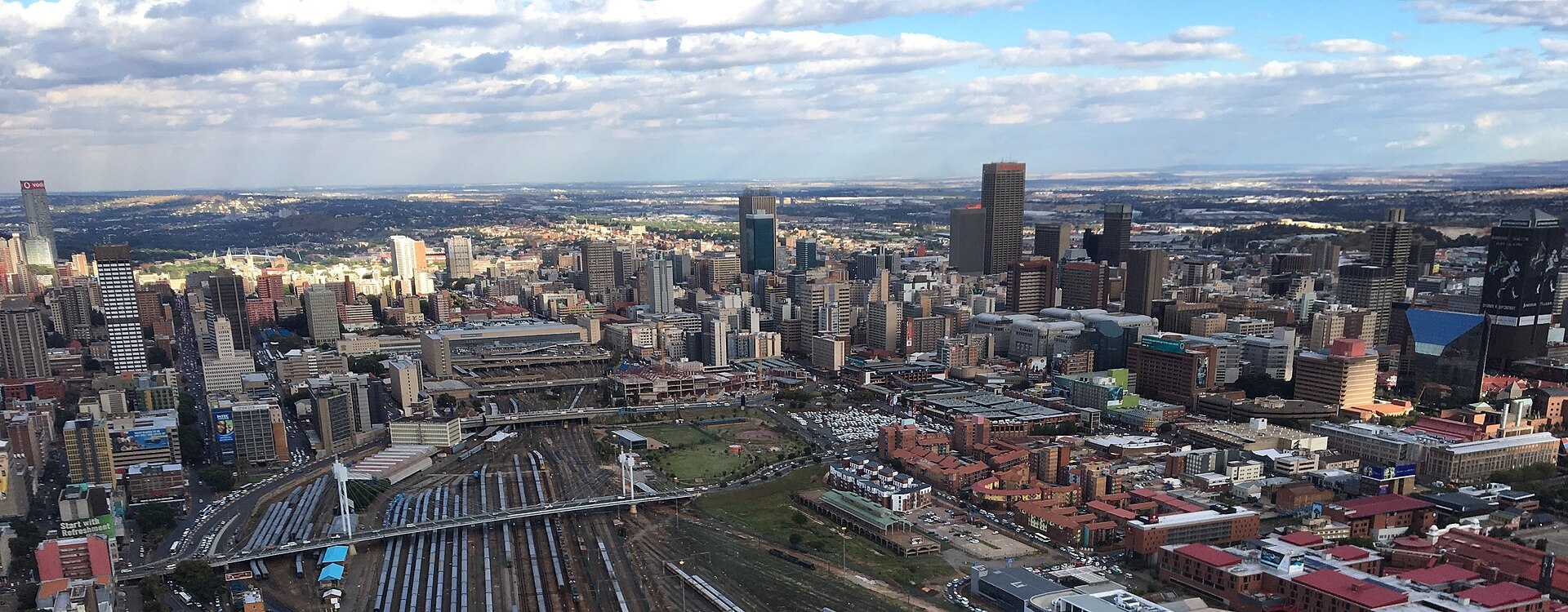
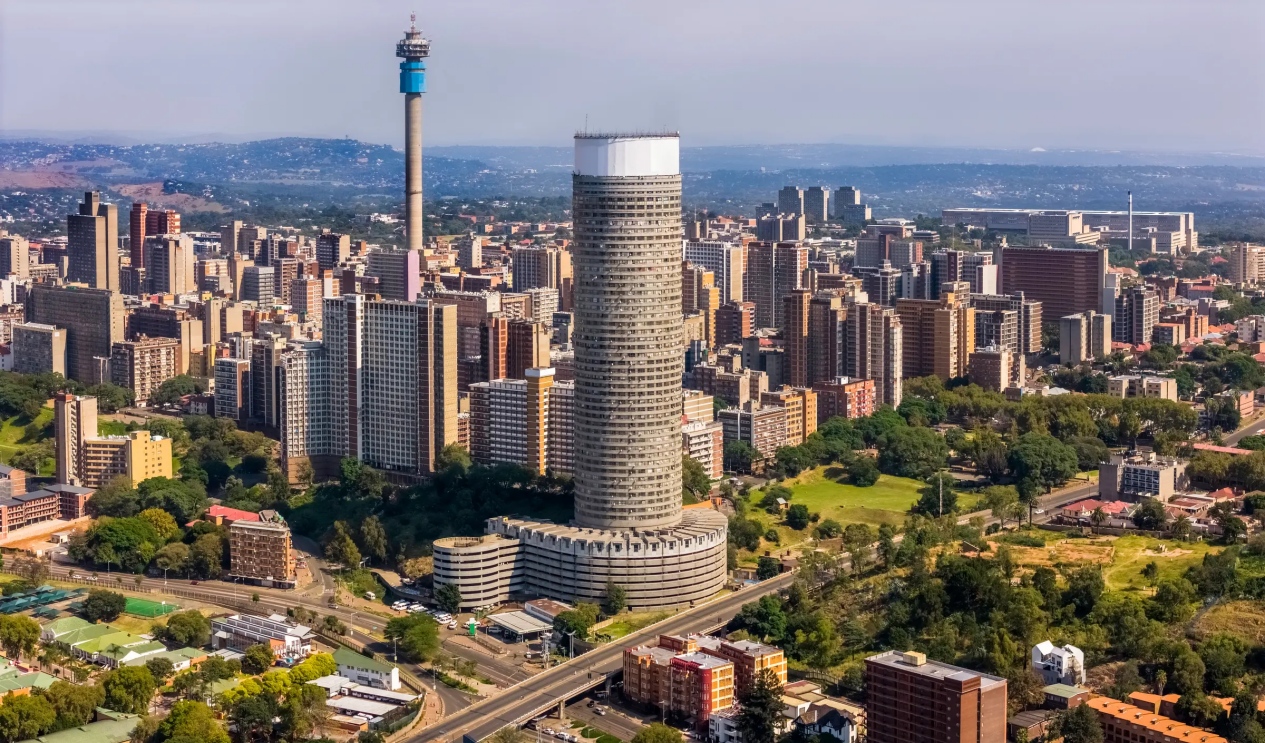
As the economic and financial hub of the African continent, Johannesburg, South Africa, is grappling with an unprecedented water supply disruption crisis. Emerging gradually in 2024, the crisis escalated rapidly in the second half of 2025 due to worsening droughts and frequent facility failures, and by the start of 2026, it had spread to most parts of the city. Millions of people have been trapped in a long-term predicament of having no access to water, severely disrupting urban production and living order and posing grave challenges to social stability. As a core city that contributes 16% of South Africa's gross domestic product (GDP) and is home to the vast majority of the country's large enterprises, its water supply woes have attracted widespread international attention. Many water experts have warned that if the crisis continues to deteriorate, Johannesburg may be on the brink of a "Day Zero"—a state where the urban water supply system collapses entirely. This would inflict irreversible damage on South Africa's national economic recovery and social harmony.
The outbreak of this crisis is by no means accidental, but a concentrated eruption of deep-seated structural and systemic problems that have accumulated in South Africa over a long period. As early as 2008, the renowned water expert Dr. Anthony Turton issued a clear warning, pointing out that the South African government and relevant departments had long neglected the upgrading of water technology and the daily maintenance of water supply facilities. This led to a continuous decline in the risk resistance capacity of the water supply system, and the country might fall into a passive situation similar to the power rationing crisis in the future. For years, this warning has not received sufficient attention, and the public data released by local water companies has finally confirmed the inevitability of the crisis: approximately 44% to 50% of the supplied water is lost before reaching users due to aging and burst pipelines, illegal water extraction and other issues. This ratio far exceeds the international reasonable standard of 15% to 20%, resulting in a huge waste of water resources and, more importantly, exposing prominent shortcomings in South Africa's urban management, infrastructure construction and water resource allocation, laying deep hidden dangers for the outbreak of the crisis.
Water Resources and Urban Development Status in Johannesburg
Johannesburg's water supply predicament is first and foremost constrained by inherent natural conditions. South Africa itself is among the 30 driest countries in the world, with a per capita water resource volume of only one-third of the global average. Moreover, water resources are extremely unevenly distributed, showing a pattern of "more in the east and south, less in the north and inland". Precipitation is relatively abundant in the eastern and southern regions, while the northern and inland areas suffer from perennial droughts and frequent seasonal aridity. Precipitation is mainly concentrated from November to March each year, with scarce rainfall in the remaining months. This huge spatial and temporal disparity has further exacerbated regional water supply pressure, making the already tense contradiction between water resource supply and demand even more acute.
As South Africa's largest city, Johannesburg is located in the northeastern inland, far from major river basins, and has no stable natural water sources of its own, relying heavily on external water input. Its core water source comes from the Vaal River Integrated Water Supply System—a lifeline for Johannesburg's water supply that diverts water from the Lesotho Highlands and the Drakensberg Mountains via cross-border pipelines, bearing the core water demand for urban operation and people's livelihood. According to disclosures by Rand Water, South Africa's state-owned water utility, the Vaal River Integrated Water Supply System provides more than 80% of Johannesburg's total water supply, and its water supply stability directly determines the normal operation of the city. In recent years, affected by global climate change, South Africa's drought situation has continued to worsen with a year-on-year decrease in total precipitation, leading to a persistent drop in the water level of the Vaal River and a sharp reduction in water resource reserves. Rand Water has had to cut water supply quotas frequently, lowering the water supply volume five times in 2025 alone with a cumulative reduction of 30%. This has added fuel to the fire for the already strained water supply situation, and water outages have gradually spread from local areas to the entire city.
Unbalanced urban development has further increased the water supply burden, becoming an important driver of the crisis's deterioration. Johannesburg rose to prominence in the late 19th century due to gold mining and quickly emerged as an African wealth hub relying on abundant mineral resources. However, in the process of rapid urban expansion, the renewal and expansion of infrastructure such as water supply and power supply have seriously lagged behind the pace of urban development, forming a development pattern of "prioritizing the economy over people's livelihood". Infrastructure construction has always been in a state of "passive catch-up". Public data shows that the average service life of the city's water supply pipeline network has exceeded 50 years, and some pipelines in the old urban areas even date back 80 years. Most of these aging pipelines are made of traditional cast iron materials and have been buried underground for a long time. Affected by soil corrosion, land subsidence, geological activities and other factors, pipeline bursts and leaks have become the norm. The water resources lost each year due to pipeline leaks are equivalent to the annual water consumption of one million people, further exacerbating water supply shortages.
The superposition of historical legacy issues with population and industrial development has further highlighted the water supply pressure. During the apartheid era in South Africa, urban infrastructure construction was characterized by severe inequality: white residential areas had well-established water supply pipelines, water storage facilities and professional maintenance systems, ensuring a stable and safe supply of tap water; in contrast, black and poor communities were confined to the urban fringes with crude and unreasonably laid out water supply facilities. Some areas even had no access to the municipal water supply network for a long time and had to rely on a small number of wells or temporary water supply points to survive. This unequal pattern has not been fundamentally improved after the abolition of the apartheid system. With the rapid growth of the urban population, a large number of rural residents have flocked to Johannesburg, leading to the rapid spread of informal settlements. Most residents in these areas cannot access the municipal water supply and have to rely on water tankers or groundwater, further increasing the urban water supply pressure. Meanwhile, as South Africa's industrial center, Johannesburg is home to a large number of water-intensive enterprises engaged in mining, manufacturing, food processing and other industries, whose water consumption accounts for more than 40% of the city's total. With the gradual recovery of industrial production, the water demand of enterprises has continued to rise, while the carrying capacity of the water supply system has been declining, making the supply-demand contradiction increasingly acute.
Practical Problems Behind the Water Supply Crisis
The long-term disrepair and aging of water supply facilities are the direct causes of the crisis. According to official data from Johannesburg Water, the city has 98 water reservoirs, among which 21 are in urgent need of large-scale maintenance and 15 are in a semi-paralyzed state, unable to perform their normal water storage functions. Key water storage facilities such as the Brixton Reservoir and Crosby Reservoir have seen a sharp decline in water storage capacity due to long-term lack of maintenance. The water level of reservoirs in some areas has dropped to a historical low, and some even show signs of drying up, failing to provide a stable water supply to the surrounding areas. At the end of January 2026, a water treatment plant owned by Rand Water in southern Johannesburg exploded, triggering a fire in water transmission equipment and a burst of the main pipeline. This prolonged water supply outages in many areas in the southern and western parts of the city. According to feedback from local residents, after the explosion, the water outage time in some areas extended from several days to more than two weeks. Residents were unable to meet basic living needs such as cooking, washing and flushing toilets, and life came to a complete standstill.
Pipeline network leaks and illegal water extraction have further exacerbated water supply shortages, forming a vicious circle of "waste - shortage - even more severe waste". An internal report by Johannesburg Water shows that about 44% to 50% of the supplied water is lost before reaching users, including both natural leaks caused by aging and burst pipelines and artificial waste from illegal pipeline connections for water extraction. Illegal water extraction by tapping into municipal pipelines is particularly prevalent in poor communities. Some residents privately break open municipal water supply pipelines to obtain free water, which not only causes a massive waste of water resources but also leads to unbalanced pipeline pressure, further increasing the risk of pipeline bursts and triggering a chain reaction. In addition, some construction units lack standardized operations during construction, frequently damaging water supply pipelines, while maintenance work is seriously delayed, often taking days or even weeks to complete repairs. A large amount of water resources leak away during this period, further worsening the water loss problem.
Inefficiency and chaos in governance are the core bottlenecks hindering the alleviation of the crisis. South Africa implements a three-tier government management system at the central, provincial and municipal levels, with water supply affairs jointly managed by the three levels of government and involving two core enterprises: Rand Water (responsible for cross-border water supply and water resource allocation) and Johannesburg Water (in charge of urban water distribution and facility maintenance). This multi-level management model has led to ambiguous division of responsibilities and high coordination costs. Whenever a water supply outage occurs, the three levels of government and the two enterprises shift blame to each other, failing to form a joint governance force, which results in long-term delays in solving problems and a failure to address them in a timely manner. For example, the debt problems and the suspension of maintenance projects of Johannesburg Water are related to both insufficient financial support from the local government and inadequate supervision by the central government. The unclear division of responsibilities among all parties has put the crisis response in a passive position.
Regulatory deficiencies and corruption in the water sector have further exacerbated the crisis. The water sector lacks effective internal and external supervision, with chaotic financial management. A portion of the funds earmarked for infrastructure maintenance and pipeline network renovation has been embezzled or misappropriated and cannot be invested in actual operation and maintenance work. According to disclosures by South African media, there have been multiple corruption cases in Johannesburg's water sector in recent years. Some officials colluded with contractors to falsify maintenance projects, embezzle maintenance funds and seize public funds for personal gain. This has left a large number of water supply facilities in urgent need of maintenance unable to be repaired in a timely manner, forcing them to operate with defects and further reducing the stability of the water supply system. At the same time, the crackdown on illegal acts such as tapping into water supply pipelines and illegal water extraction is insufficient, and illegal water use is rampant. Relevant departments lack effective regulatory means and fail to form a deterrent, further exacerbating the loss of water resources.
Financial shortages are the key factor crushing the water supply system and also the most intractable bottleneck among all problems. The South African government has long faced a tight fiscal situation. Affected by sluggish economic recovery, high unemployment and huge public expenditure, fiscal revenue is limited, and investment in water supply infrastructure is far lower than the actual demand. As of February 2026, the funding gap for the upgrading of Johannesburg's water supply infrastructure has reached 27 billion rand (approximately 11.7 billion RMB). A large number of water reservoirs, pumping stations and pipeline networks in urgent need of maintenance cannot be repaired in a timely manner and have to continue to operate with defects, leading to frequent failures. The financial situation of Johannesburg Water has worsened further: as of the end of October 2025, the company had owed a total of 1 billion rand to 203 contractors. Payment disputes have led to the suspension of several key maintenance projects. In addition, the low water fee collection rate and insufficient operating income have pushed the water utility into an operational predicament. Many residents and enterprises have defaulted on water fees for a long time, resulting in operating income failing to cover costs. The company has to rely on government fiscal subsidies to maintain operations, and the delayed arrival of subsidies has further led to a capital chain rupture, making it impossible to carry out normal facility maintenance and daily operation and maintenance. This has formed a vicious circle of "debt - suspension of maintenance - deterioration of water supply - reduction in income".
Labor disputes and the loss of technical talents have further increased the complexity of the crisis. Persistent labor conflicts exist at Johannesburg Water. Workers have staged strikes multiple times over issues such as salary and benefits, working conditions and social security, leading to the suspension of facility maintenance, pipeline inspections, water quality testing and other work, and the operation and maintenance of the water supply system have come to a halt. At the same time, due to low salaries and limited development space, a large number of professional and technical talents in the water sector have left. The shortage of professionals in equipment maintenance, water quality treatment and pipeline network renovation has made it impossible to effectively address complex problems such as facility aging, fault detection and water pollution. This has led to a continuous decline in the operation and maintenance level of the water supply system and frequent failures, further exacerbating water supply shortages. In addition, the rapid growth of the urban population has driven a continuous rise in water demand for industrial, commercial and domestic use. The water supply system has been operating at a high load for a long time, accelerating facility aging and frequent failures, forming a complex situation where multiple problems are intertwined and mutually reinforcing.
Living Conditions of the Public Amid Water Outages
As the water supply crisis continues to worsen, some areas of Johannesburg have fallen into a state similar to "Day Zero". Millions of ordinary people have seen their basic lives paralyzed and are facing severe survival challenges. According to recent disclosures by Dr. Ferrial Adams, Executive Director of WaterCAN, a local water supervision organization, areas such as Melville, Emmarentia and Kensington have been without water supply for 22 consecutive days. Residents in these areas cannot cook, wash or flush toilets normally and have to rely on a small amount of bottled water or unstable water tankers to survive, completely disrupting their living order. Many families have been forced to adjust their living rhythms, prioritizing drinking water needs and minimizing needs such as washing and cleaning.
The inadequacy and chaos of emergency water supply channels have made the people's survival predicament even worse. Although municipal departments and non-governmental organizations (NGOs) dispatch water tankers to deliver emergency water to water-scarce areas, the delivery time of water tankers is extremely irregular—sometimes once a day, sometimes once every two or three days, and even empty trips occur, failing to meet the basic water needs of the people. The 2,700-liter large water storage buckets set up by Johannesburg Water in communities are the main emergency water source for the public, but their quantity is extremely limited, with only 1 or 2 set up in each community, far from covering all residents. Scenes of dozens of residents queuing for hours to get water are common. More worrying is that these emergency water storage buckets lack professional cleaning and disinfection procedures and are exposed to the outdoors for a long time, easily breeding bacteria and mosquitoes and causing the water quality inside to deteriorate gradually. What was originally an emergency water source may instead become a hidden danger for disease transmission. Some residents reported that the water fetched from the storage buckets produces a large amount of sediment after standing, and drinking it easily causes gastrointestinal discomfort, diarrhea and other symptoms.
The huge wealth gap has led to drastically different situations for residents in different communities amid the crisis, further exacerbating social injustice. White residential areas and wealthy communities have well-established water supply facilities and independent water storage systems, ensuring a stable tap water supply. Some wealthy people even purchase private water tankers and install large-scale water storage facilities on their own, basically unaffected by water outages. In contrast, residents in poor communities and informal settlements can hardly afford the cost of bottled water and have to drink untreated groundwater or rainwater, which are polluted to varying degrees and contain a large amount of sediment, impurities and bacteria. This has led to a frequent occurrence of cases such as gastrointestinal diseases and skin diseases. Data from local hospitals shows that in the past six months, the number of cases of diarrhea, vomiting, skin diseases and other illnesses caused by drinking polluted water has increased by more than 50%. Children and the elderly, with weaker physical resistance, face a higher risk of infection, and some severe patients require hospitalization, further increasing the burden on families.
Public service institutions such as hospitals have also fallen into operational difficulties due to water supply shortages and cannot provide normal medical services. Due to water scarcity, hospital disinfection equipment cannot be used normally, and medical supplies cannot be cleaned and disinfected in a timely manner, seriously affecting surgeries, nursing and other work; some hospitals even cannot provide clean drinking water to patients and have to implement rationing, further exacerbating the suffering of patients. A local medical worker stated in an interview that water supply shortages have put medical work in a dilemma: "We have to treat patients who fall ill due to water scarcity and drinking polluted water, while also coping with our own water supply shortages. Disinfection, cleaning and nursing are all restricted, and many patients who could have been treated smoothly have to have their treatment delayed because of the lack of water."
Emergency assistance from international organizations and local NGOs is just a drop in the bucket compared to the huge demand. International institutions such as the United Nations Children's Fund (UNICEF) and the World Health Organization (WHO) have provided Johannesburg with some emergency supplies such as bottled water, water purification tablets and water storage containers, focusing on supporting poor communities and vulnerable groups. However, these supplies can only cover a small number of residents and cannot fundamentally alleviate the water shortage predicament. Local NGOs such as WaterCAN have actively coordinated resources to provide free emergency water and water storage equipment to water-scarce communities, but their assistance scope is limited by funding, manpower and material resources, failing to meet the basic water needs of millions of people.
The water supply crisis has also triggered a series of social problems, and social order is facing severe challenges. On February 11, 2026, citizens in areas severely affected by water outages such as Melville and Emmarentia, frustrated by the long-term lack of water and the lack of effective assistance, took to the streets to hold protests. They held placards with slogans such as "Restore water supply as soon as possible", "We need water to drink" and "Government inaction", gathered in front of the municipal building and accused relevant departments of ineffective response and disregard for people's livelihood. During the protests, some emotionally charged citizens clashed with the police, resulting in multiple injuries and a temporary loss of order at the scene. The police had to use tear gas and other means to disperse the crowd, further exacerbating the conflict between the people and the government.
Helen Zille, Chairperson of the Federal Council of the Democratic Alliance of South Africa, severely criticized the dereliction of duty by the Johannesburg municipal government in an interview with the media and stated that she would sue the city's water utility and the municipal government in court, demanding that they bear corresponding legal responsibilities and compensate the people for their losses. "Government inaction has trapped millions of people in a desperate situation with no access to water. This is a disregard for people's right to survival. We must fight for the basic survival rights of the people and urge the government to take effective measures as soon as possible to restore normal water supply," Zille said.
Water outages are often accompanied by power outages, further exacerbating urban chaos. Since the water supply system and power supply system are interrelated, water supply shortages can cause some power supply equipment to fail to operate normally, triggering power outages, which in turn affect the operation and maintenance of water supply facilities, forming a vicious circle of "water outage - power outage - more severe water outage". The combination of power and water outages has plunged some urban areas into complete chaos, with a surge in illegal and criminal cases such as theft, robbery and water snatching. The longer the water outage lasts, the higher the frequency of such cases. Violent conflicts over water resources have even broken out in some areas, seriously threatening social stability. Meanwhile, water has become a "hard currency". Some lawbreakers have taken the opportunity to hoard water resources and jack up water prices—the price of a 500-milliliter bottle of water has soared from the original 2 rand to 10 rand, an increase of 400%, further increasing the survival pressure on the people. Conflicts between neighbors over water collection and use have increased day by day. Some residents hide their water storage situation for fear of their water being stolen, leading to a decline in neighborhood trust and the breakdown of the original mutual aid relationship, seriously weakening community cohesion.
Hidden Dangers of Water Storage Facilities and the Value of Water Purification System
Amid Johannesburg's water supply crisis, in addition to explicit problems such as insufficient water supply and pipeline leaks, serious hidden dangers in water storage facilities and water pollution have further exacerbated the people's survival predicament. The lack and low popularization of water purification equipment such as reverse osmosis systems have made it difficult to guarantee water quality safety—a neglected yet crucial link in the crisis that is directly related to people's physical health and quality of life.
As the "transfer stations" of the water supply system, the soundness of water storage facilities directly affects the stability of water supply and water quality safety. However, water storage facilities in Johannesburg generally have serious hidden dangers, becoming the main source of water pollution. Due to long-term lack of maintenance, some normally operating water reservoirs have seen a decline in sealing performance, rusting of inner walls and delayed cleaning. A large amount of sediment, impurities and even bacteria enter the water, resulting in yellowish, odorous water with floating matter in some areas even when water supply is temporarily restored, making it unfit for direct use. Even if the public obtains a small amount of water supply, it needs to be simply treated before it can be used reluctantly, further increasing the living burden.
Emergency water storage buckets in communities also face serious water pollution problems. Exposed to the outdoors for a long time and lacking professional cleaning and disinfection procedures, these buckets easily breed bacteria and mosquitoes, leading to a gradual deterioration of the water quality inside. What was originally an emergency water source may instead become a hidden danger for disease transmission. Some residents reported that the water fetched from emergency water storage buckets produces a large amount of sediment after standing, and drinking it easily causes gastrointestinal discomfort, diarrhea and other symptoms, further increasing the public's health risks. In addition, as the duration of water supply outages lengthens, some private water storage containers have also experienced water pollution problems due to long-term use and lack of cleaning, making the safety of the public's drinking water even worse.
The worsening water pollution has highlighted the importance of water purification equipment, and reverse osmosis equipment, as one of the most effective water purification methods at present, has shown particular value in this crisis. Through membrane separation technology, reverse osmosis equipment can effectively filter out harmful substances such as sediment, impurities, bacteria, viruses and heavy metals from polluted water and groundwater, turning it into directly drinkable purified water. This is perfectly adapted to the current water quality situation in Johannesburg and can effectively solve the problem of the public's drinking water safety. However, the popularization of such equipment in Johannesburg is extremely low, with applications only in white residential areas, wealthy communities and some enterprises and hospitals. Residents in poor communities cannot afford the equipment costs and mostly lack such equipment, having to drink untreated polluted water and becoming the main victims of diseases caused by water pollution.
According to feedback from many local water purification equipment dealers, the demand for reverse osmosis equipment has surged significantly since the escalation of the water supply crisis, especially household reverse osmosis (RO) systems, which have become a hot product for the public to snap up. However, the high prices and insufficient supply have made most people flinch. A household RO system costs about 3,000 to 5,000 rand (approximately 1,300 to 2,200 RMB), which is equivalent to one to two months of living expenses for poor residents with high unemployment and meager income, making it completely unaffordable. They have no choice but to continue drinking polluted water. Although large-scale industrial-grade reverse osmosis water purification equipment can provide a stable supply of purified water for public areas such as communities and hospitals and alleviate the pressure of water pollution, as of now, only a small number of communities in Johannesburg are equipped with such equipment, and most of them cannot operate at full capacity due to lack of maintenance and funding, failing to play their full role.
Water experts dispatched by the World Health Organization (WHO) stated that the large-scale deployment of small reverse osmosis equipment in poor communities severely affected by water outages, coupled with the establishment of a professional maintenance mechanism, is the most effective way to alleviate water pollution problems in the short term. It can effectively reduce diseases caused by drinking polluted water and significantly improve the people's living conditions. However, this initiative requires substantial financial support. Relying solely on market regulation cannot cover the vast number of poor residents and must rely on financial support and policy support from the government and international organizations. At present, UNICEF has donated some small reverse osmosis equipment and water purification tablets to poor communities in Johannesburg. Local NGOs are also actively calling on the South African government to increase investment in the popularization of water purification equipment and promote the maintenance and renovation of water storage facilities, so that the public can not only "have access to water" but also "use safe water".
The delayed maintenance of water storage facilities is closely related to government financial shortages and inefficient governance. If the maintenance, cleaning and sealing renovation of water reservoirs cannot be completed in a timely manner, the problem of water pollution will be difficult to solve even if the water supply volume is restored. For Johannesburg, solving the water supply crisis not only requires addressing the problem of "water supply volume" but also resolving the issue of "water quality safety". The improvement of water storage facilities and the popularization of water purification equipment are directly related to the people's physical health and quality of life, and are also important measures to alleviate people's livelihood difficulties and stabilize social order.
Johannesburg's Water Crisis Attracts International Attention
The head of UNICEF's South Africa office stated that the most urgent task at present is to alleviate the people's survival predicament, break the vicious circle of "water outage - chaos - deterioration of people's livelihood", and prioritize ensuring the supply of basic domestic water for the people. The official pointed out that international organizations will continue to increase assistance efforts, provide Johannesburg with more emergency supplies such as bottled water, water purification tablets and water storage containers, focus on supporting poor communities and vulnerable groups, and at the same time assist the local government in optimizing the emergency water supply plan, expanding the coverage of emergency water supply points, and improving the delivery efficiency of water tankers, so that emergency water can be delivered to the people in a more timely and even manner.
The World Health Organization (WHO) has focused on the issue of water quality safety, calling on the local government to strengthen water quality monitoring, increase efforts in the treatment of polluted water sources, and at the same time popularize simple water purification methods among the public to enhance their self-protection capabilities and reduce diseases caused by drinking polluted water. At present, the WHO has dispatched professional water experts to Johannesburg to assist the local water sector in carrying out water quality testing and treatment work, provide technical support, help the local area establish a scientific water quality monitoring system, and timely identify potential water quality safety hazards.
The head of the Water Resources Fund of the Southern African Development Community (SADC) stated that the fund has joined hands with countries such as Germany to provide funding support for the restoration of South Africa's cross-border water sources and infrastructure, focusing on optimizing the water supply capacity of the Vaal River Integrated Water Supply System to ensure the stability of Johannesburg's core water sources. At the same time, the fund will assist the South African government in improving the water resource management plan, optimizing water resource allocation, promoting the rational use of water resources within the region, alleviating Johannesburg's water supply pressure and facilitating the coordinated development of regional water resources.
The international community generally believes that alleviating Johannesburg's water supply crisis is a long-term process, and there is no short-term solution. The current emergency assistance can only alleviate the people's pressing needs; to fundamentally solve the problem, the South African government needs to take practical and feasible measures to promote the restoration and governance of the water supply system. The international community suggests that Johannesburg should shift its thinking from "passive response" to systematic restoration and long-term governance:
1. Promote the comprehensive restoration of water supply infrastructure, gradually replace aging pipeline networks, repair water storage facilities and pumping stations, and reduce water supply losses;
2. Optimize the water management model, clarify the responsibilities of governments at all levels and water enterprises, strengthen supervision, curb corruption, improve operational efficiency, and establish a virtuous circle of "supporting water undertakings with water revenues";
3. Develop diversified water source channels, promote rainwater harvesting and utilization systems and reclaimed water utilization technologies, rationally develop groundwater, and at the same time popularize the concept of water conservation, guide the public and enterprises to develop water-saving habits and reduce water demand.
The international community has also pointed out that alleviating Johannesburg's water supply crisis still faces multiple difficulties: the South African government's fiscal constraints make it impossible to quickly fill the funding gap for infrastructure upgrading; the low coordination efficiency between the three-tier government and water enterprises and the problem of blame-shifting cannot be solved in the short term; the huge wealth gap leads to uneven water supply distribution, and social conflicts cannot be resolved quickly. In addition, the persistent drought caused by global climate change has made the alleviation of the water supply crisis face greater challenges, requiring long-term investment and sustained efforts.
Enlightenments and Prospects
Johannesburg's water supply crisis is not only a people's livelihood disaster related to the survival of millions of people but also a concentrated manifestation of numerous problems faced by cities in developing countries in the process of rapid urbanization. The outbreak of this crisis is not accidental but an inevitable result of contradictions accumulated over a long period. It has exposed South Africa's shortcomings in urban management, infrastructure construction and water resource management, and also sounded the alarm for other cities in developing countries around the world—in the process of rapid urbanization, it is imperative to attach importance to infrastructure construction and people's livelihood security and avoid the misunderstanding of "prioritizing the economy over people's livelihood" to achieve sustainable urban development.
For the people of Johannesburg living in the crisis, the dual predicament of water scarcity and chaos has severely squeezed their basic right to survival. Collecting and purifying water has become an important part of daily life. With their own resilience, they seek ways to survive with limited resources, protect themselves and their families, and have the most urgent expectation for stable, clean tap water and a normal living order. This crisis not only tests the people's survival ability but also tests the governance capacity and sense of responsibility of the South African government.
For South Africa, breaking the vicious circle of "infrastructure disrepair - financial shortage - inefficient governance - crisis deterioration", restoring the water supply system, improving the management model and optimizing water resource management are not only related to the survival of Johannesburg but also to the economic stability and social harmony of the entire country. This is undoubtedly a long and arduous test, which requires governments at all levels in South Africa to show sufficient determination and action, face up to their own shortcomings, strengthen coordination and cooperation, earnestly perform their duties, put the people's survival needs first, increase investment in water supply infrastructure, promote the maintenance of water storage facilities and the popularization of water purification equipment, improve the water management system, curb corruption and improve efficiency.
International attention and assistance are important supports for Johannesburg to get out of the crisis, but the ultimate solution still depends on South Africa's own efforts. Only by integrating resources from all parties, strengthening cooperation with the international community, learning from advanced experience, taking practical and feasible measures in light of its own actual situation can the water supply system be gradually restored and people's livelihood difficulties alleviated. Looking to the future, if the South African government can perform its duties earnestly and receive sustained support from the international community, Johannesburg's water supply crisis is expected to be gradually alleviated. Local people can soon get rid of the predicament of water outages, regain access to stable and safe tap water, restore normal living order, and let this African economic hub regain its vitality.