AMANDA has 28 years of water treatment industry experience and 16 years of export experience.,it is a production and distribution company of water treatment products, production:UV sterilizer/Ozone generator/Industry and Household purification system;distribution:FRP tank/RUNXIN valve/ Water distributor/RO membrane/Industry RO membrane housing/Filter cartridge /Filter housing .
AMANDA has 28 years of water treatment industry experience and 16 years of export experience.,it is a production and distribution company of water treatment products, production:UV sterilizer/Ozone generator/Industry and Household purification system;distribution:FRP tank/RUNXIN valve/ Water distributor/RO membrane/Industry RO membrane housing/Filter cartridge /Filter housing .
Reverse Osmosis Pure Water Equipment: Working Principle, Process & Component Functions
You are here:Home » News » Industry news » Reverse Osmosis Pure Water Equipment: Working Principle, Process & Component Functions
Reverse Osmosis Pure Water Equipment: Working Principle, Process & Component Functions
Views: 0 Author: Site Editor Publish Time: 2025-12-17 Origin: Site
Reverse osmosis (RO) pure water equipment, RO water purification equipment, RO water treatment equipment, reverse osmosis water treatment system, deionized water equipment, RO pure water machine, etc.
Working Principle of Reverse Osmosis Pure Water Equipment
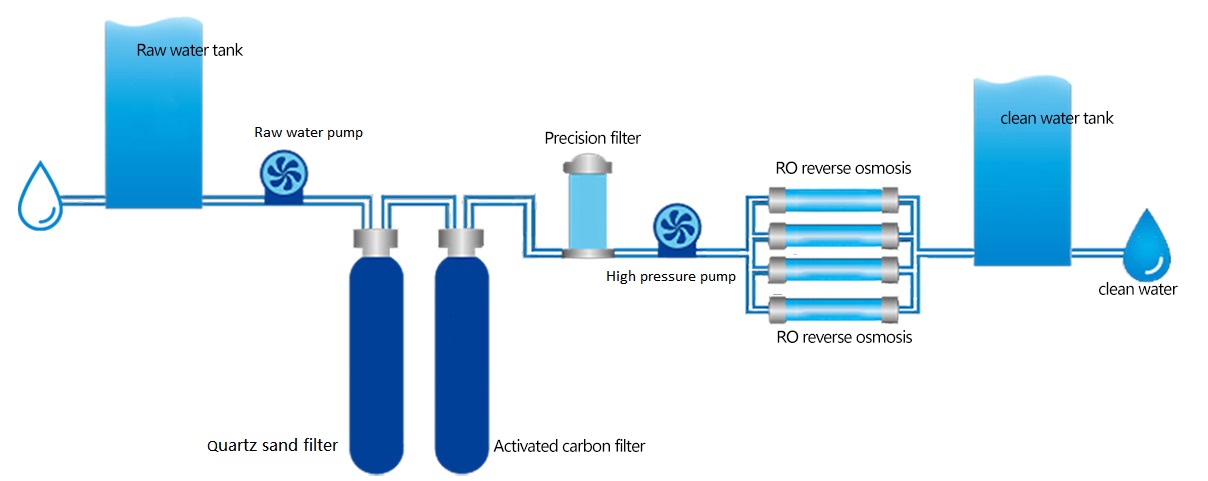
Raw water from the raw water tank is pressurized by the raw water pump and sent through a pre-treatment process consisting of a quartz sand filter → activated carbon filter → security filter for the RO system → RO membrane filtration system. The core component of the entire equipment is the RO reverse osmosis membrane in the RO system.
This membrane allows water molecules and ionic mineral elements to pass through, while rejecting most dissolved inorganic salts (including heavy metals), organic compounds, bacteria, viruses and other contaminants. This separates the purified permeate water from the concentrated reject water. Operating at room temperature, it uses a phase-free physical process to desalinate and demineralize saline water. Ultra-thin composite membrane elements can achieve a desalination rate of 95–99% or higher.
The pore size of the RO membrane is only 0.0001 microns, while viruses typically range from 0.02–0.4 microns in diameter and common bacteria from 0.4–1 micron. This enables the removal of colloids, organic matter, bacteria, viruses and other impurities from water.
Simplified Working Principle
The RO semipermeable membrane is covered with numerous pores, whose size is equivalent to that of water molecules. Since bacteria, viruses, most organic pollutants and hydrated ions are much larger than water molecules, they cannot pass through the RO membrane and are separated from the permeated water.
Among various impurities in water, dissolved salts are the most difficult to remove. Therefore, the water purification efficiency of reverse osmosis is often evaluated by its desalination rate. The desalination rate mainly depends on the selectivity of the RO semipermeable membrane, and high-selectivity RO membrane elements can achieve a desalination rate of up to 99.7%.
Water Production Process Flow of Pure Water Equipment
Functions of Each Component of Pure Water Equipment
Raw Water Tank
It mainly reduces mechanical failures of the pump caused by unstable raw water pressure during operation, ensures a sufficient water supply to the equipment, and guarantees the stable operation of the whole system.
Raw Water Pump
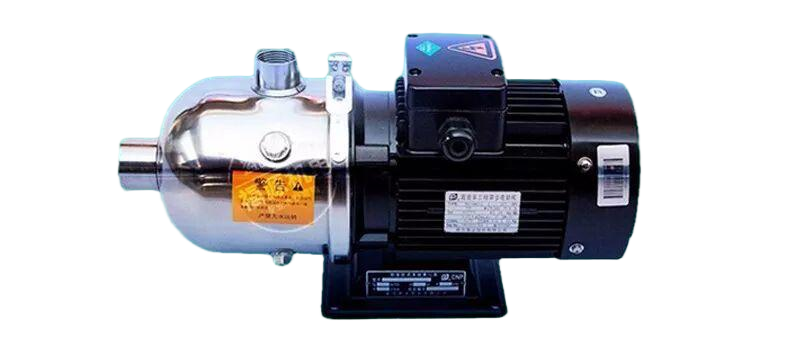
It provides pressurization for the sand filter, activated carbon filter and precision filter of the pure water equipment, ensuring stable and sufficient inlet water pressure. It acts as a booster to make sure the pressurized water pressure exceeds the permeation resistance of the filters, enabling the pressurized water to efficiently pass through the pre-treatment system and supply an adequate water source to the RO system.
Quartz Sand Filter
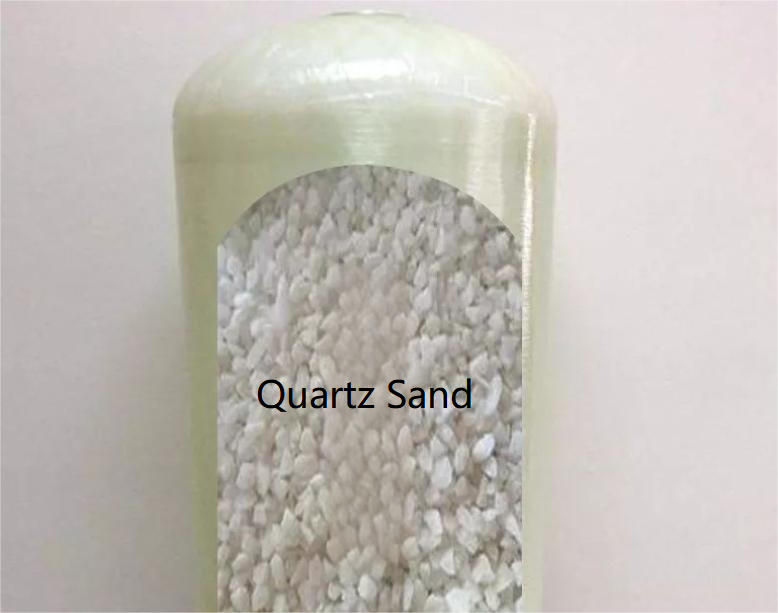
The quartz sand filter consists of a filter tank (usually made of fiberglass) filled with 4–8 mesh refined quartz sand. It can effectively trap sediment, impurities, colloids, suspended solids and other contaminants in the inlet water, purifying the water quality for subsequent processes.
Activated Carbon Filter
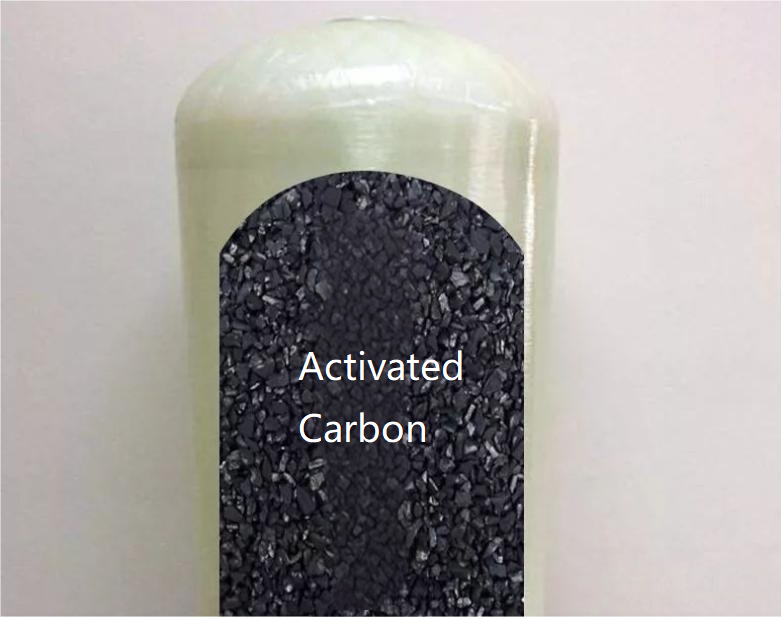
The activated carbon filter is composed of a filter tank (usually fiberglass) filled with granular activated carbon dedicated for water purification. It is used to adsorb colorants, odors, residual chlorine and organic compounds in water, reducing the residual chlorine content to ≤1 PPM.
Security Filter (also known as Precision Filter)
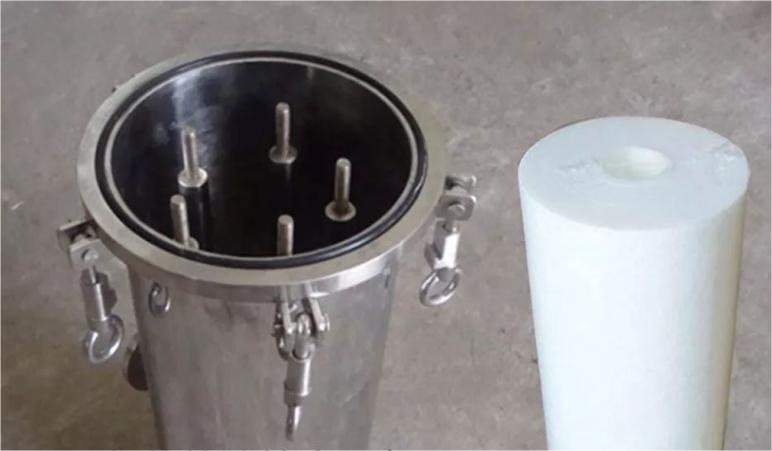
It serves as the final filtration step before the pre-treated water (from the sand and activated carbon filters) enters the RO membrane. Equipped with 5-micron high-precision melt-blown filter cartridges, it can remove fine particles larger than 5 microns, oil mist, solid particles and other impurities. The PP cotton filter cartridges feature high water flux, uniform structure, large dirt-holding capacity, low pressure drop and stable filtration efficiency.
RO Main Unit System
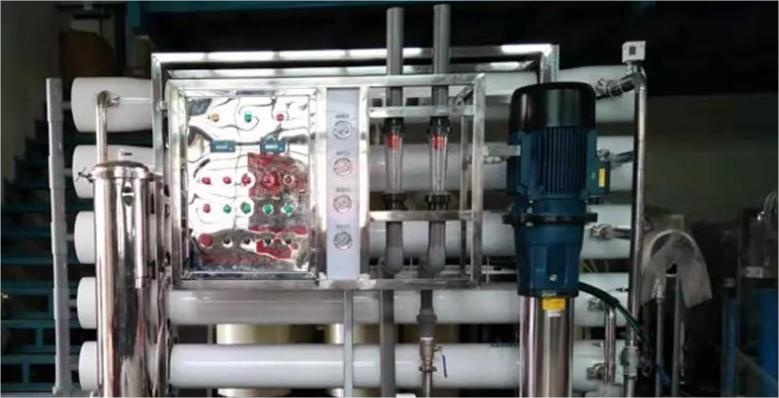
The RO system consists of RO membrane housings and RO membranes. A high-pressure pump applies pressure exceeding the osmotic pressure to the filtered water. Utilizing RO membrane separation technology, it effectively removes almost all types of suspended particles, organic colloids, viruses, bacteria and organic pollutants with a molecular weight greater than 200.
It produces pure water with a conductivity of ≤10 μs/cm (when raw water TDS ≤200 PPM). The surface pore size of RO membranes generally ranges from 0.5 to 10 nm, capable of effectively retaining substances larger than 0.0001 microns. As one of the finest membrane separation products, it delivers high-efficiency desalination with a desalination rate of ≥98%.