AMANDA has 28 years of water treatment industry experience and 16 years of export experience.,it is a production and distribution company of water treatment products, production:UV sterilizer/Ozone generator/Industry and Household purification system;distribution:FRP tank/RUNXIN valve/ Water distributor/RO membrane/Industry RO membrane housing/Filter cartridge /Filter housing .
AMANDA has 28 years of water treatment industry experience and 16 years of export experience.,it is a production and distribution company of water treatment products, production:UV sterilizer/Ozone generator/Industry and Household purification system;distribution:FRP tank/RUNXIN valve/ Water distributor/RO membrane/Industry RO membrane housing/Filter cartridge /Filter housing .
Why Can’t Edible Salt Be Used for Regeneration? The Need for Water Treatment Salt Standards
You are here:Home » News » Industry news » Why Can’t Edible Salt Be Used for Regeneration? The Need for Water Treatment Salt Standards
Why Can’t Edible Salt Be Used for Regeneration? The Need for Water Treatment Salt Standards
Views: 0 Author: Site Editor Publish Time: 2025-12-23 Origin: Site
In most developed countries, the vast majority of water treatment plants use dedicated water treatment salt as the consumable for sodium hypochlorite generators. Leading European equipment suppliers, for instance, typically provide specialized electrolytic salt as a standard package alongside their water disinfection equipment for municipal water applications. By contrast, on-site sodium hypochlorite generation systems in many regions still widely rely on self-sourced uniodized edible salt as the raw material—a practice fraught with risks.
Edible salt is not designed or certified for water treatment electrolysis scenarios. Critical issues arise when it is misused in such processes:
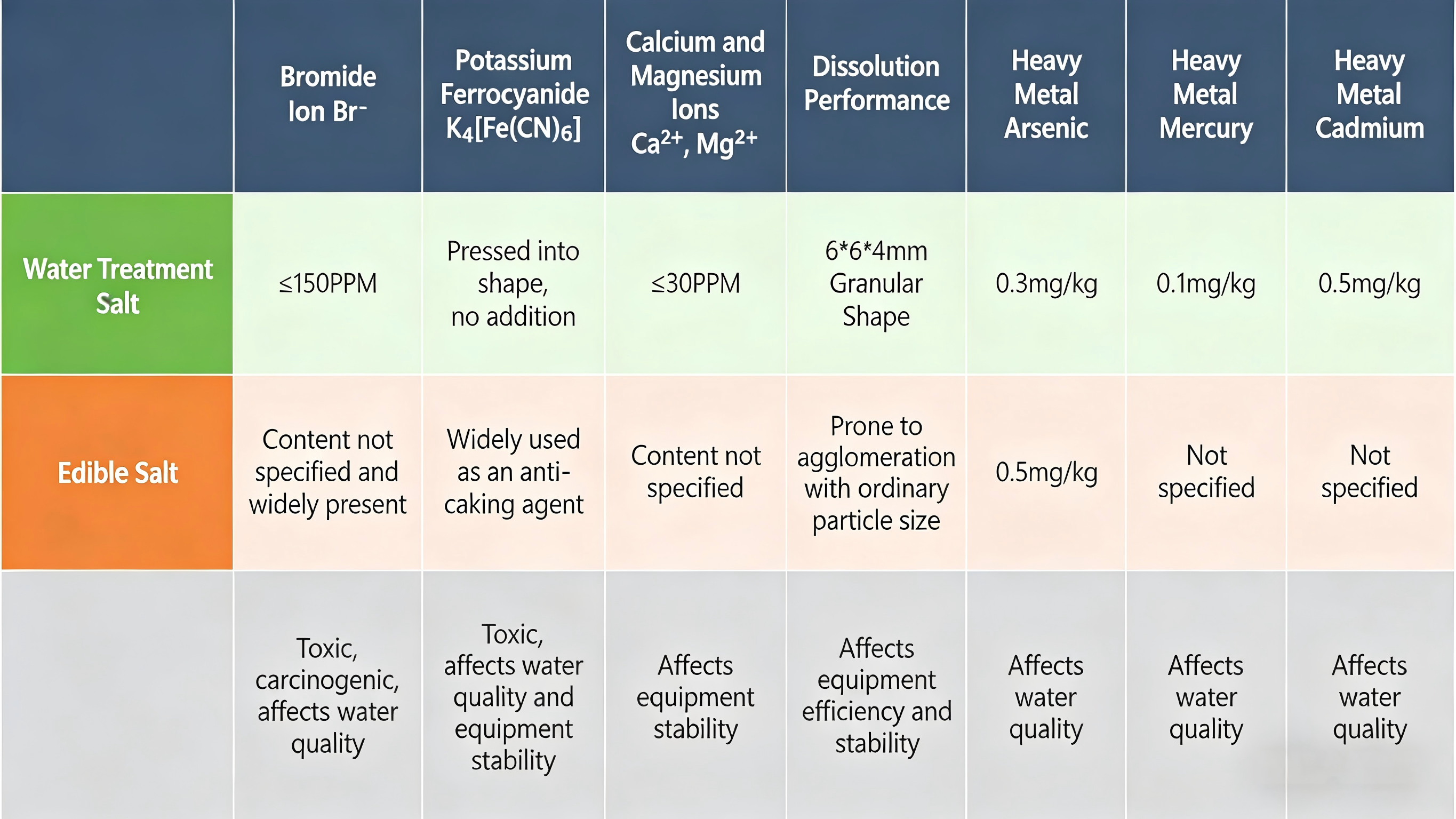
Microscopic bromide (Br⁻) in edible salt undergoes electrolysis to form bromate (BrO₃⁻), a compound classified as a potential human carcinogen by the World Health Organization (WHO). Water treatment-specific salt strictly limits bromide content (≤150 ppm), which controls bromate formation in treated water to ≤0.001 ppm—well below the stringent limits set by the US Environmental Protection Agency (EPA) (0.01 ppm in drinking water, per the Safe Drinking Water Act) and the European Union’s Drinking Water Directive (0.01 ppm).
Anti-caking agents in edible salt, most commonly potassium ferrocyanide (K₄[Fe(CN)₆]), decompose during electrolysis to produce toxic potassium ferricyanide, which poses risks of kidney damage. Under UV light, heat, or acidic conditions, it can further break down into hydrogen cyanide (HCN)—a highly toxic substance. Additionally, this decomposition elevates iron ion levels in water, potentially exceeding the EU’s 0.3 ppm iron limit (EN 1925) and the US EPA’s 0.3 ppm secondary drinking water standard. The reaction also generates iron ferrocyanide precipitates, which compromise water quality and color.
Heavy metal contaminants in unregulated edible salt can accumulate in treated water. In contrast, water treatment-specific salt adheres to strict heavy metal limits aligned with EU and US standards: lead (≤0.01 mg/L), arsenic (≤0.01 mg/L), mercury (≤0.001 mg/L), cadmium (≤0.005 mg/L), and barium (no detectable levels), ensuring finished drinking water meets the highest safety benchmarks.
Notably, substituting edible salt for water treatment-specific salt remains an unregulated practice in many markets, creating significant gaps in water safety and equipment performance.
Edible Salt Is Not a Substitute for Water Treatment-Specific Salt
Impacts on Drinking Water Safety Standards
Bromate formation riskBromide ions in edible salt electrolyze into bromate, a proven potential carcinogen. With water treatment salt’s bromide limit of ≤150 ppm, bromate levels in treated water are controlled to ≤0.001 ppm—10 times lower than the 0.01 ppm threshold mandated by the US EPA and EU Drinking Water Directive.
Toxic byproducts from anti-caking agentsPotassium ferrocyanide, a common anti-caking additive in edible salt, decomposes into kidney-damaging potassium ferricyanide during electrolysis. It can further degrade into lethal hydrogen cyanide when exposed to UV light, heat, or acid. This process also raises iron ion concentrations, risking violations of the 0.3 ppm limit set by both EU and US standards, while iron ferrocyanide precipitates degrade water clarity and color.
Heavy metal complianceWater treatment-specific salt’s naturally low heavy metal content ensures treated water meets the strictest EU and US drinking water standards for lead, arsenic, mercury, cadmium, and barium—eliminating contamination risks associated with unfiltered edible salt.
Impacts on Sodium Hypochlorite Generator Performance
Diaphragm and energy efficiency risksPotassium ferrocyanide electrolysis produces iron oxide (Fe₃O₄), which can pierce or clog diaphragms in membrane-equipped generators. For non-membrane systems, this byproduct increases energy consumption and generates unnecessary toxic residues.
Scale buildup and operational instabilityCalcium and magnesium ions in edible salt increase electrolysis energy costs and cause scale formation, which disrupts generator performance. Stable generator operation is critical to consistent disinfection output—directly safeguarding public drinking water supplies.
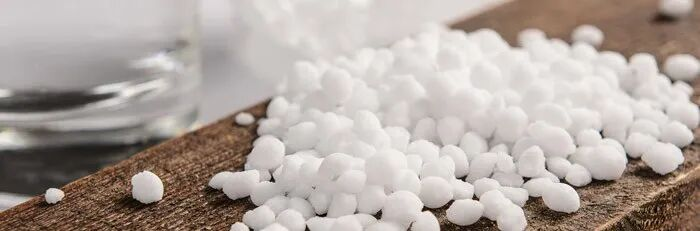
Dissolution inefficiencies and equipment damageStandard edible salt often forms hard clumps at the bottom of solution tanks, leading to incomplete dissolution and supersaturated brine. Undissolved salt crystals can be drawn into electrolytic cells, causing waste, increased maintenance costs, and even equipment malfunctions. Water treatment-specific salt is granulated to prevent clumping without anti-caking agents; its porous particle structure enables fast, uniform dissolution, creating stable saturated brine and supporting optimal generator performance.
Advantages of Using Water Treatment-Specific Salt
Compliance with industry regulations and standardsFormal water treatment salt standards, established by regulatory bodies such as EU technical committees and US industry associations, provide clear guidelines for salt quality in electrolytic disinfection systems—ensuring full compliance with global drinking water safety protocols.
Reduced toxic byproducts and improved water qualityCompared to edible salt, water treatment-specific salt meets the strictest limits for bromide and heavy metals. This eliminates the risk of “intentional contamination” from substandard raw materials, satisfying the elevated water quality requirements of densely populated urban areas and strict regulatory jurisdictions.
Lower equipment maintenance costs and extended service lifeWater treatment-specific salt’s tight controls on calcium, magnesium, and anti-caking agent content prevent scale buildup and diaphragm damage. This stabilizes generator operation, cuts routine maintenance expenses, and prolongs equipment lifespan.